Our story
PointFlow started with a frustration we kept running into.
Everywhere we looked — corner shops, pharmacies, grocers, market traders — it was the same setup. A till that only rang up sales. A laptop with three half-finished spreadsheets. And a carrier bag of receipts waiting for the accountant at year-end.
None of it talked to each other. You'd sell on the till, write it down again for stock, then add it up a third time for the books — hours every week, and still nobody was sure what the shop actually made.
The other thing we couldn't get past: how much software assumes the internet is always there. It isn't — not in a power cut, not in a busy market with patchy signal. A till that stops when the Wi-Fi drops isn't really a till.
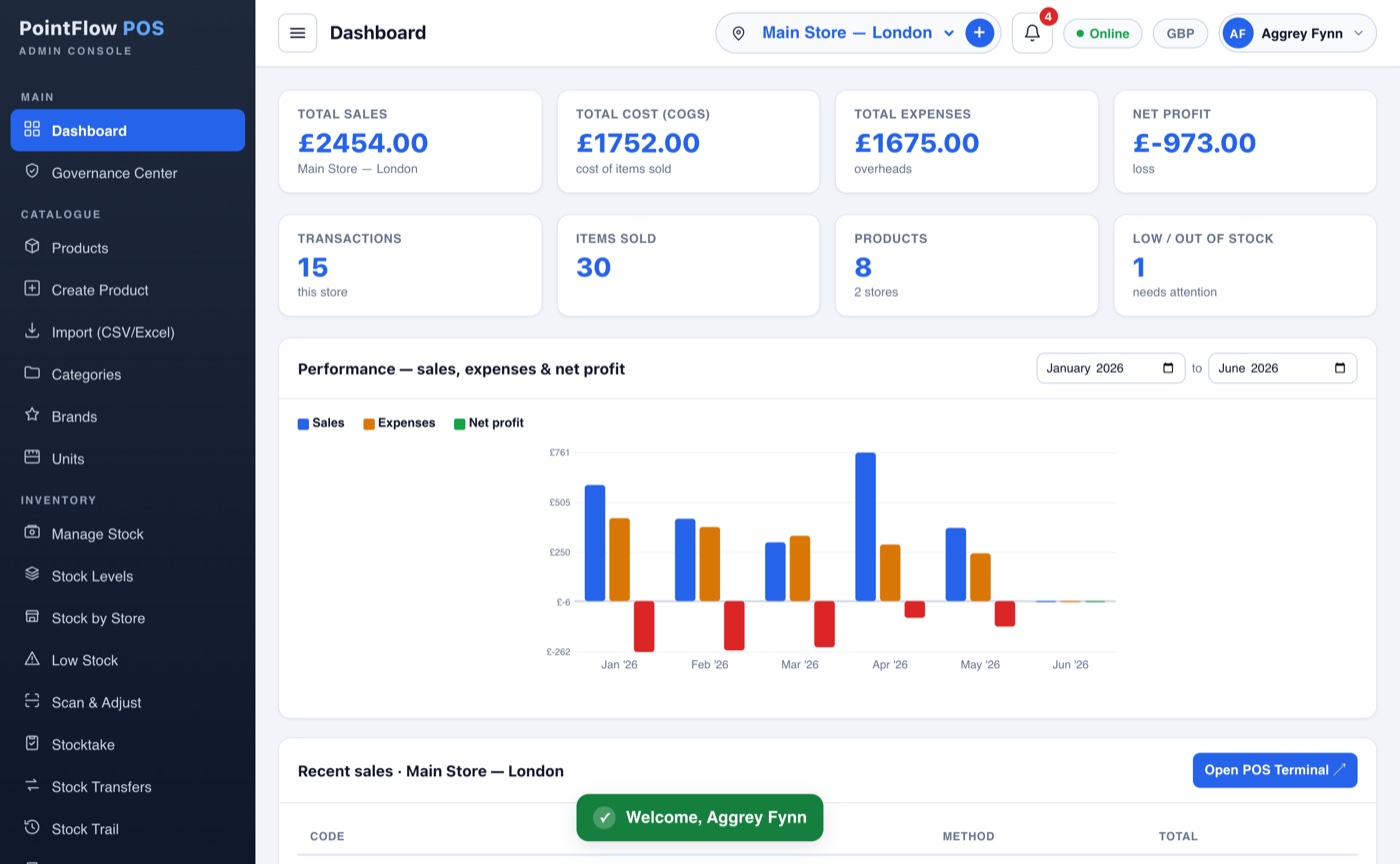
So we built PointFlow around two stubborn ideas: one honest system for the whole shop, and it has to keep working when everything else doesn't. Sell once, and the stock, the books and the day's takings move together. Lose the connection, and you keep trading.

Why it matters
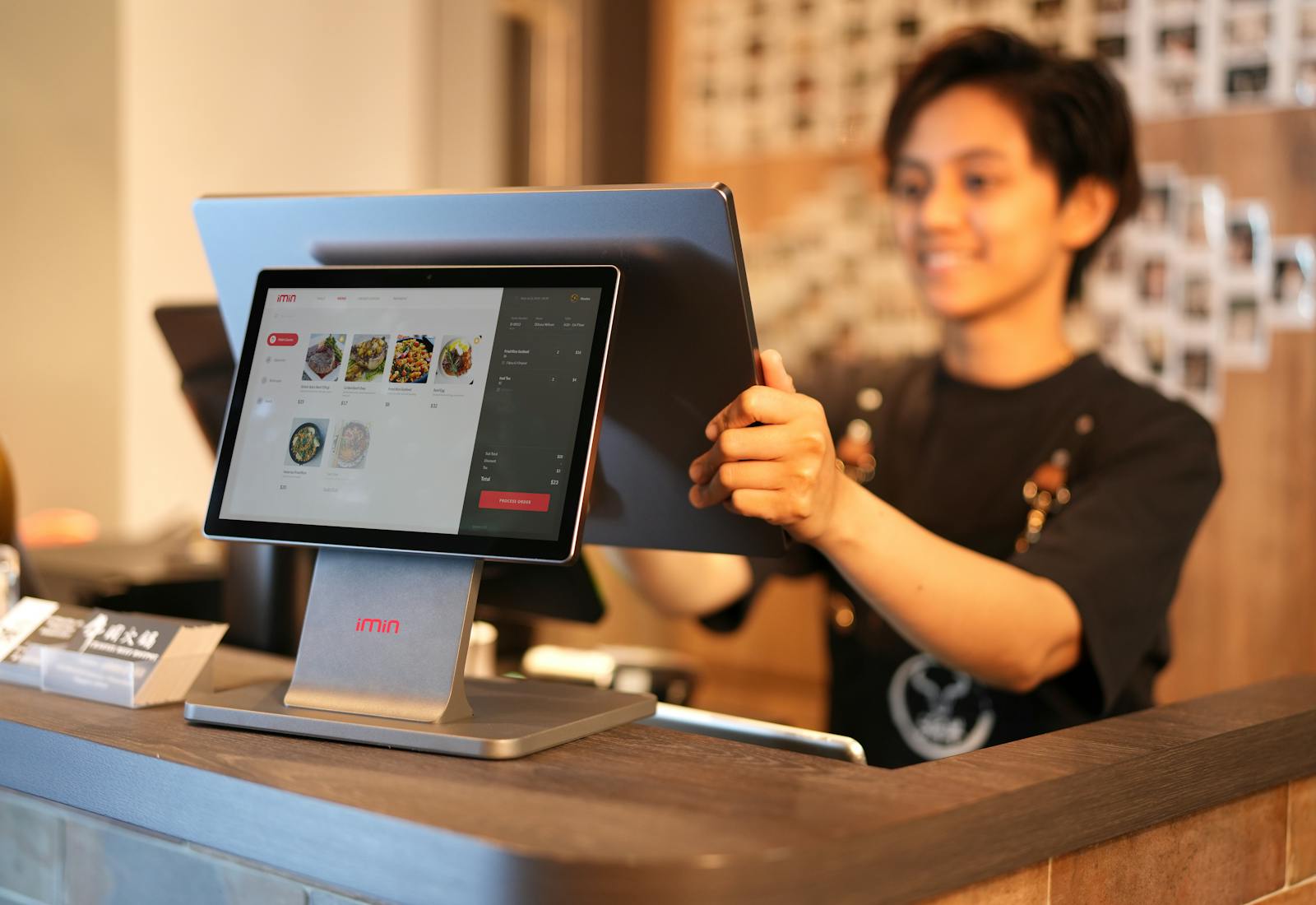
PointFlow wasn't sketched in a boardroom. Every screen was shaped by real days at a real till — the rush, the returns, the cash-up at close — so the software fits the way a shop actually runs, not the other way round.

Let's show you what it looks like behind your counter.
Book a demo